The beginning is the same as for Traditional Cyanotypes
Beware: while traditional cyanotypes carry minimal risk of staining your home blue, the experimental types can be very messy. Wear clothes that can be permanently stained, cover your work surface with plastic.
Ready to print:
- Choose a sunny, high UV day to create your prints.
- Wrap the hard cardboard backing in a thin plastic bag to protect it from warping. Place a larger plastic bag or an old plastic shoe mat underneath the cardboard (to protect your house, and your clothes).
- Remove one of the prepared cards and place on the cardboard.
- Arrange the pressed plant on the surface of the prepared card.
- Spray the entire print with white vinegar
- Whisk together a little bit of dish soap (1 tsp) with water until foamy. Spread this mixture onto your glass sheet.
- Place the glass, bubble side down, onto the prepared card
- Clip in place or leave loosely on the glass
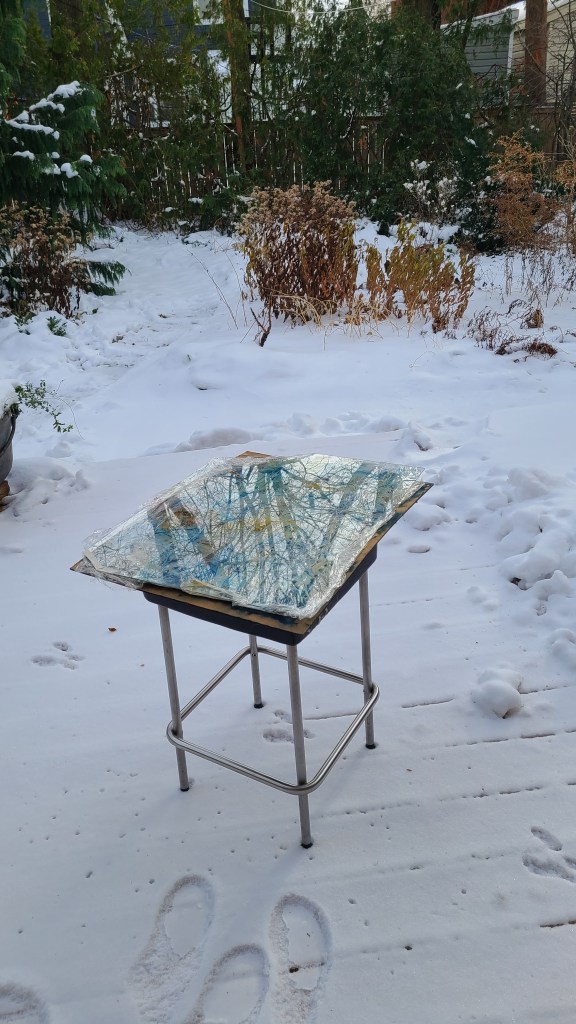
- The now wet, watery cyanotype chemical will drip and stain your floor and clothes and hands. Carefully carry the glass (and the larger plastic bag underneath it) outside and leave in the sun for at least 4 hours (On cool days I’ve left them as long as 30 hours).
Washing your cyanotype
- Take the ‘baked’ print inside, unclip, and place into a sink of water (take care not to let water flow onto the image as the jet may effect the image). Your image will now turn blue.
- Swish around for about 30 seconds (you may want to wear rubber gloves for this). Once you don’t see any yellow chemical swirling around, take the card out of its bath and place onto a paper towel (on top of protective plastic sheeting).
- Blot the image with another paper towel to absorb any chemical bleeding.
- Let dry. The background continues to darken for another day or so, as do the imprints.
Tips:
Don’t attach yourself to an outcome; the image has a mind of its own
- Start with the bookmark and work your way to the larger card (this allows you to test the timing of the exposure and the effect of a particular subject)
- You can choose slightly thicker plants than you might with more traditional cyanotypes because the liquid will run beneath the plant and add to the effect.
- Take care that the entire card is covered by the glass; edges of glass will act as an object and leave an imprint. Take care not to overlap the clip over and into the paint, as it will act as an object and leave an imprint
- Once you place the print outside, don’t disturb it, as movement will disturb the angle of the sun and disturb the images
- Be patient; exposure varies depending on the UV and the heat. I do print in our very cold Ottawa winter but the colour range is more limited to blurry blues.
Additional ingredients to bring out unusual colours. Here are just a few ideas:
- White vinegar spray
- Mix a little additional cyanotype chemical and squirt some of this directly onto your prepared plants and card.
- Mix a bit of turmeric into the soap bubbles (careful: turmeric stains heavily onto any porous surface)
- sea salt
- Liquid pigment from natural sources, eg beets, coffee, tea, etc
 sundogs.blog